
Why Patient Access Problems Are Usually Workforce Problems in Disguise
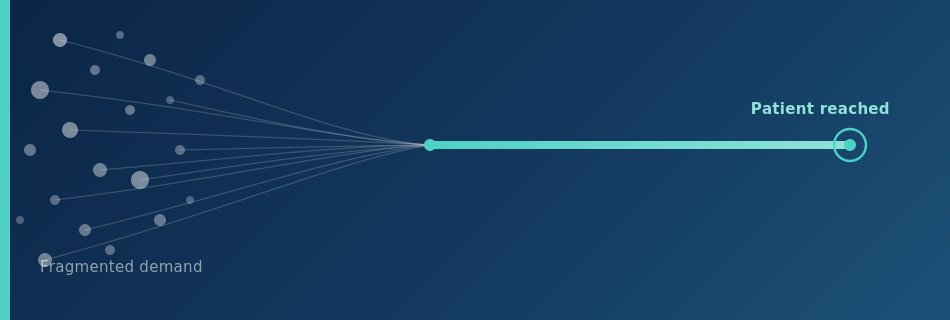
Waiting times dominate the conversation about patient access. Boards report on them, regulators measure against them, and headlines seize on them. But treating access as a demand problem — too many patients, not enough appointments — misses where the bottleneck usually forms.
Access rarely fails at the point of care. It fails earlier, in the workforce capacity available to process, triage and route demand before a clinician is even involved. A long wait for an appointment is frequently the visible symptom of an invisible constraint: not enough hours in the system to sort, prioritise and direct the volume already arriving.
This distinction matters because it changes where solutions are sought. Adding appointment slots treats the symptom. It does nothing for the administrative churn consuming clinical hours before those slots are ever booked — repeated triage, chasing information that should already exist, manually routing referrals that a better-connected system would place automatically. Increase capacity at the front door without addressing that churn, and the same proportion of hours continues leaking into coordination rather than care.
Healthcare delivery models built around this insight look different from those built around appointment volume alone. Telehealth, positioned correctly, is not a patient-facing convenience bolted onto an existing pathway. It is a redistribution mechanism — shifting routine contact, follow-up and low-acuity triage away from constrained clinical hours and into channels that do not compete for the same scarce time. Handled well, it changes the workforce equation feeding the access problem, rather than adding another queue for staff to manage alongside the ones already straining.
For healthcare leaders, this reframes the diagnostic question. Rather than asking how many more appointments the system can generate, the sharper question is how much clinical and administrative time is currently consumed by demand that could be intercepted, resolved or redirected before it reaches a clinician at all. Digital health infrastructure that answers that question tends to move access metrics further than capacity expansion alone — because it addresses where the constraint actually sits, not where it becomes visible.
Access, in other words, is rarely just an access problem. It is a workforce problem wearing a waiting-list disguise.
Want to learn how Telehealth can help improve patient access, increase capacity and support more resilient healthcare delivery?
Explore how Place Medical helps healthcare providers implement scalable Telehealth solutions.